
Criminal Case: Supernatural
Pretty SimpleAdventure
4.72.11K Reviews
- Version
- 2.45.1
- Installs
- 1.00M
- Age Rating
- Teen
Screenshots

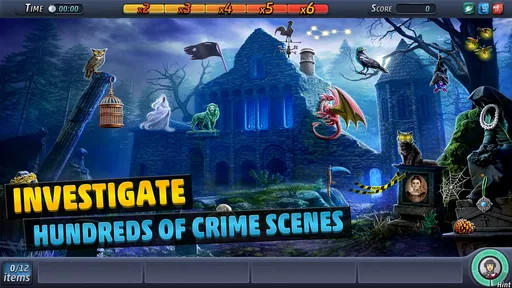
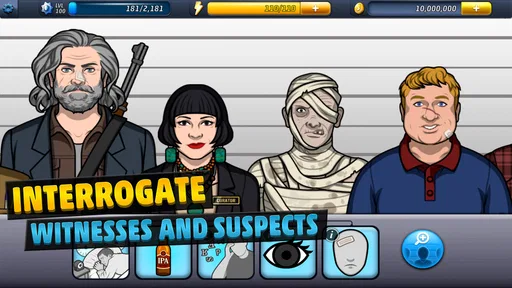
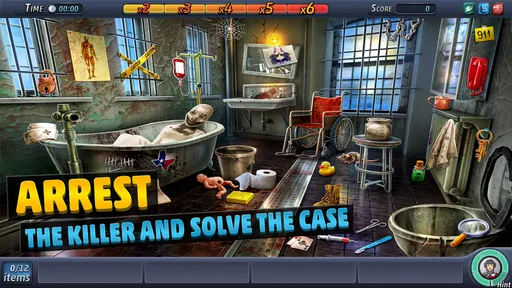
Our Review of Criminal Case: Supernatural
 Analysis by Appyee
Criminal Case: Supernatural takes the familiar hidden-object investigation format and moves it into a darker world of murder cases, strange clues, and supernatural atmosphere. I found its main appeal in the way it turns a short search scene into a small piece of detective work: you are not simply tapping objects on a screen, but trying to understand what each location contributes to the case. Developed by Pretty Simple, this free adventure game is aimed at players who enjoy mystery stories in manageable sessions rather than long, demanding action sequences.
The central capability is straightforward but effective: you investigate crime scenes by finding hidden objects and using the results to move the case forward. That sounds simple, yet the supernatural setting gives the routine a different mood from an ordinary puzzle game. The question is not only whether I can spot an item quickly, but whether the scene, the evidence, and the characters are building toward a convincing explanation. That combination makes it easy to play casually while still giving each chapter a reason to continue.
How the supernatural investigation works in practice
Each investigation is built around returning to locations, studying what is on screen, and completing the search task placed in front of you. The basic interaction is accessible: I scan the scene, identify the requested objects, and tap them. The challenge comes from visual clutter, similar shapes, distracting details, and the pressure to stay attentive. A scene that looks obvious at first can become slower when several objects blend into the background or appear in an unexpected position.
The best way to approach a scene is not to sweep randomly from one side to the other. I get better results by dividing the image into zones and checking each area methodically. That reduces the chance of overlooking a small object and prevents me from repeatedly revisiting the same corner. When a scene feels familiar, I deliberately slow down instead of relying on memory, because the requested items can make an otherwise recognizable location feel different each time.
This is where the game’s investigative theme has a practical effect. The search is not an isolated minigame that could be removed without changing anything. It is the activity that lets the story progress, reveals evidence, and gives context to the people involved in the case. I enjoyed that rhythm more than a collection of unrelated puzzles because every completed scene feels connected to a larger question: who is responsible, what happened, and how does the supernatural element fit into the explanation?
It is also a good fit for short play sessions. I can pick it up when I have a few spare minutes, complete part of an investigation, and stop without needing to remember a complicated control scheme. That convenience matters on a phone. The game does not ask me to master fast reflexes, learn a large ruleset, or keep several active abilities in mind. My attention goes toward observation and story progression.
At the same time, the simplicity has a limit. If you want a mystery game built around deep deduction, detailed questioning, or freely testing several theories, this is not the same experience as a traditional detective adventure. The search scenes carry much of the interaction, so the investigation feels guided rather than completely open-ended. I see that as a deliberate trade-off: it makes the game welcoming, but it also means experienced mystery fans may eventually want more control over the reasoning process.
Making each search more efficient
One useful habit is to read the entire request before tapping anything. I used to begin with the most obvious object, but that can make me lose track of what remains. A quick mental grouping helps: look first for distinctive shapes, then for objects that match the scene’s colors, and finally for small items hidden among similar textures. This is especially useful when the location contains many decorative details.
I also recommend treating mistakes as information rather than immediately repeating the same search pattern. If I tap an area and do not find the expected object, I mark that region mentally and move on. Returning later with a fresh visual scan is more productive than staring harder at the same spot. This small change makes the game feel less frustrating and turns the scene into a process of elimination.
Another practical tip is to play with the screen comfortably visible rather than rushing through a scene while distracted. The game’s core depends on noticing small visual differences, so poor attention affects enjoyment more than it would in a simple matching game. When I play during a quiet break, I usually perform better and appreciate the atmosphere more than when I try to squeeze in a search while doing something else.
Progress also rewards patience. The temptation is to treat every scene as a race, but speed is not always the most satisfying goal. I prefer to understand why a location matters to the case and use the search as a way to absorb the setting. Players who focus only on finishing the list may miss some of the mood that separates this adventure from a plain hidden-object collection.
The strongest everyday scenario
The game works particularly well for someone who has a short evening break and wants a story-based activity without committing to a long play session. Imagine finishing a commute, making a cup of tea, and having ten minutes before another task. A chapter of a large role-playing game may be too much, while a quick arcade round may feel empty. Criminal Case: Supernatural sits between those choices: it gives that short session a clear purpose and leaves me with a sense of having advanced an investigation.
It is also suitable for players who enjoy discussing theories with friends or family. I can explain the unusual setting, compare impressions of a suspect, or talk about which clue seems important without needing to describe complicated controls. The mystery theme creates conversation even when the actual interaction remains simple. That makes it more appealing than a purely visual spot-the-object game for people who want a little narrative motivation.
However, I would not choose it for a group looking for competitive multiplayer entertainment or for someone wanting a fully independent offline-style puzzle book. Its appeal depends on the ongoing case structure and the way searches connect to story progression. If your ideal game is one where every puzzle has a single clever logical solution, the hidden-object format may feel too dependent on careful visual scanning instead of deduction.
Where the trade-offs become noticeable
The free entry point is helpful because I can try the game without paying first. The title is listed as free, while optional in-app purchases range from less than a dollar to amounts reaching ninety-nine dollars and ninety-nine cents per item. That wide range makes it important to decide early how I want to play. I prefer treating purchases as optional conveniences rather than part of the basic promise of the game, and I would set a spending limit before handing the device to a younger player.
The Teen content rating is another useful signal. It fits the murder-case premise and supernatural tone, which are more mature than a cheerful family hidden-object game. I would not assume that every child will find the atmosphere comfortable just because the controls are easy. Parents should consider whether crime investigations and eerie themes suit the player, especially if the game is being used as a casual distraction.
There is also a difference between accessibility and depth. The controls are easy to understand, but the repeated search format can become familiar. Players who enjoy the first few investigations mainly for the discovery of the setting may later notice the pattern more clearly. For me, the story and atmosphere need to remain interesting enough to justify returning to another scene. If I am not in the mood for visual searching, the game does not offer the same kind of alternative activity that a broader adventure title might provide.
Another trade-off is pacing. A guided investigation is convenient because I always know what type of action to take next, but it can reduce the feeling that I am personally solving the case. The game gives me a role in the investigation, yet it does not turn every conclusion into a free-form reasoning exercise. That is why I would recommend it to someone who wants mystery flavor with approachable mechanics, not to someone searching for a demanding detective simulation.
Performance expectations should also be realistic. The game’s minimum operating-system requirement is Android 7.0, and the current version is 2.45.1. Those details make it accessible to a range of Android devices, but compatibility alone does not guarantee that an older phone will feel equally comfortable for detailed visual searches. On a smaller or less responsive screen, tiny objects can be harder to identify and tapping may feel less precise. I would keep the game updated and play on the device where I have the clearest display.
The game’s popularity suggests that the format has found a substantial audience: it has passed one million installs, with an average rating of 4.7 from roughly thirty-six thousand ratings and around two thousand one hundred written reviews. I regard those figures as encouraging rather than decisive. They show that many players enjoy the formula, but they do not remove the central question of fit. If hidden-object searches already feel repetitive to you, a strong average rating will not change that personal preference.
Who gets the most from it
I think the best audience is made up of casual mystery fans who like a supernatural backdrop, clear objectives, and progress that can be made in small pieces. The game is especially comfortable for people who prefer tapping and observation over action controls. It also suits players who want an adventure that explains what to do without requiring a long tutorial or a detailed knowledge of detective conventions.
It can be a good choice for someone moving from simple puzzle apps toward story-driven games. The hidden-object scenes provide an easy entry point, while the murder investigations give the activity more purpose than matching colors or clearing identical tiles. I would also recommend it to players who enjoy revisiting familiar locations and noticing small details that were easy to ignore during the first search.
On the other hand, I would steer away from it if your priority is uninterrupted exploration, complex inventory management, or branching decisions that substantially change the outcome. A classic point-and-click adventure may be a better match for that preference. Likewise, players who need a game with constant action may find the deliberate search pace too quiet. Criminal Case: Supernatural is strongest when you want to observe, read the situation, and make steady progress rather than react quickly.
One less obvious strength is how well it supports attention training without presenting itself as a formal brain exercise. Searching a busy crime scene encourages me to compare shapes, colors, and positions while keeping a short list in mind. That does not make it an educational tool, but it does give the repeated interaction a practical mental rhythm. I can play for relaxation while still feeling engaged enough not to drift away from the screen.
Another strength is the way the supernatural theme changes the emotional meaning of ordinary objects. A room, street, or interior is not just a backdrop when the case suggests something unusual has happened there. I found myself paying more attention to the atmosphere because the setting encouraged speculation. That is a meaningful distinction from generic hidden-object games, where the objects may be visually busy but narratively interchangeable.
There is a useful social angle as well. Because the cases are easy to describe, the game can become a light conversation starter: I can mention the strange evidence, ask someone what they think happened, and then continue playing. It does not require a second player, but it gives the solo experience a small shared-theory element. That is a good reason to choose it over a completely abstract puzzle when playing around family or friends.
My recommendation after playing
Criminal Case: Supernatural succeeds because it understands its lane. It is not trying to replace a full detective adventure with elaborate deductions. Instead, it uses hidden-object searches as the engine for supernatural murder investigations, making the experience easy to start and simple to revisit. I appreciate that clarity. When I want a story-flavored mobile game that fits into a short break, it gives me a concrete task and a reason to care about the next scene.
My recommendation comes with one condition: enjoy the search itself. The supernatural cases and visual atmosphere can make the format more compelling, but they cannot completely hide the repetition for players who dislike finding objects on a crowded screen. I would also keep the optional purchase system in mind, especially when sharing the device with someone else, and remember that the Teen rating reflects the darker subject matter.
For the right player, the balance is appealing. The game offers a free way into a recognizable adventure structure, a strong mystery mood, and enough visual attention to make each short session feel active. Pretty Simple has created something I would suggest to a friend who wants supernatural investigation without complicated controls or a large time commitment. If your ideal mobile mystery is a guided case that rewards patience and careful observation, this is a worthwhile choice; if you need deep deduction or constant variety, look elsewhere.
In my experience, that distinction matters more than the impressive audience response. The game is at its best when I approach it as a compact investigation rather than a demanding crime simulator. I scan carefully, follow the evidence, accept the guided structure, and let the atmosphere carry the story. With that expectation, Criminal Case: Supernatural becomes an enjoyable adventure for quiet breaks, casual mystery sessions, and players who like their detective work served one searchable scene at a time.
Verdict
Strengths of Criminal Case: Supernatural
- Easy-to-learn hidden-object gameplay suits short play sessions.
- Supernatural crime stories add variety beyond standard detective cases.
- Distinct locations and character designs give the game visual personality.
- Regular tasks and events provide extra goals after completing cases.
- Free-to-play access lets users try the main investigation without paying.
Limitations of Criminal Case: Supernatural
- Energy limits can interrupt investigations and encourage waiting.
- Some clues are difficult to spot on smaller phone screens.
- Repeated searches may feel monotonous during longer case chapters.
- Premium items and boosts can make progress feel slower without spending.
- An internet connection may be required for several game features.
Other Releases by Pretty Simple
View All
Criminal Case
Adventure4.6

Criminal Case: Save the World!
Adventure4.7

Criminal Case: Pacific Bay
Adventure4.7

Criminal Case: Mysteries
Adventure4.6
Similar Picks in This Category
View All
Roblox
Roblox Corporation4.2

Pokémon GO
Niantic, Inc.3.5

Ninja warrior: legend of adven
TOH Games4.6

Ninja Arashi
Black Panther4.6

Eyes - The Horror Game
Fearless Games sp. j.4.5

Critical Action:Gun Strike Ops
FPS Shooter & Action Game4.3
Frequently Asked Questions
What is Criminal Case: Supernatural about?
Criminal Case: Supernatural is a hidden-object adventure game in which you investigate mysterious crimes with a supernatural theme. You examine crime scenes, search for clues, question suspects, and connect evidence to solve cases. The story is presented through dialogue, investigations, and short puzzle sections, making it suitable for players who enjoy casual detective games with paranormal elements and episodic storytelling.
Is Criminal Case: Supernatural free to download and play?
The game is generally free to download and offers a substantial amount of content without requiring an initial purchase. However, it includes optional in-app purchases that can provide extra energy, hints, resources, or faster progress. You can play without spending money, but waiting for energy to refill may be necessary, especially during longer investigation sessions or when replaying several scenes.
Does the game require an internet connection?
An internet connection may be required for certain features, including loading advertisements, synchronizing progress, accessing social functions, and receiving updated content. Some parts of the game may appear playable offline, but the experience is more reliable when connected to Wi-Fi or mobile data. Players should also check the store listing for the latest offline-play information before downloading.
Is Criminal Case: Supernatural appropriate for children?
The game is designed as a casual mystery experience, but its cases can include crime scenes, suspicious deaths, ghosts, and other supernatural subjects. The presentation is usually stylized rather than highly graphic, yet younger children may still find some themes unsettling. Parents should review the age rating, in-app purchase settings, advertisements, and the type of dialogue before allowing a child to play.
What can I do if I run out of energy or get stuck on a case?
Energy is used to investigate scenes and normally restores over time, so running out does not permanently block your progress. You may be able to wait, watch optional advertisements, use available rewards, or purchase additional resources. If a scene is difficult, carefully scan for objects, use hints sparingly, and replay locations when possible to improve your score and earn more helpful rewards.
Play our best games!


